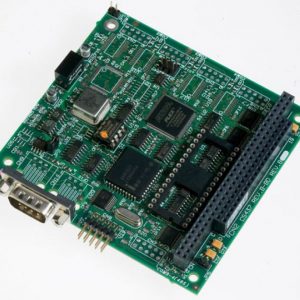
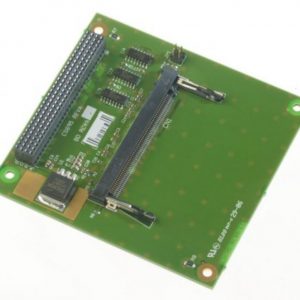
M520R PC/104 PCMCIA Module
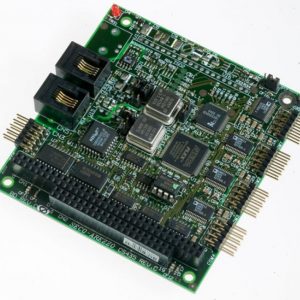
The M520R module is a Compact Flash type PCMCIA card adapter in PC/104 format. Available with a single or dual slot it integrates on board the VG-PD6722 controller, therefore no additional external controller are needed.

M520R PC/104 PCMCIA Module
The M520R module is a Compact Flash type PCMCIA card adapter in PC/104 format. Available with a single or dual slot it integrates on board the VG-PD6722 controller, therefore no additional external controller are needed.
You must be logged in to post a comment.
The Ellipse 12 is an All-In-One LCD PC based on an embedded PC architecture which mounts a Celeron® M Processor at 800MHz. As integrated LCD PC, Ellipse 12 can be used as stand-alone PC or Networking Terminal. It integrates a 12.1″ TFT display with 800×600 resolution 16.8 mil. colors, allowing an extended visual area and with the option of Touch Screen it is suitable for any kind of interactive applications. With up to 1GB of System DRAM and 256 Kbytes Cache, ELLIPSE 12 supports the most common Operating Systems: Windows XP and Linux.
The M706R is the SECO EPIC™ board with Intel® Celeron® M and Pentium® M processors, Intel® 855GME / ICH4 chipset and 2/3 D Graphic Controller, supporting AGP4x interface. This board integrates many features for the most demanding applications. So, on the fronplate there are 2 serial ports, 4 USB 2.0 ports, 2x 10/100BaseT and 1x 10/100/1000BaseT Ethernet ports (1000BaseT optional), 1 parallel, 1 DVI and 1 CRT connector. There is also a slot for the increasingly used Compact Flash and the possibility to use 15 GPIOs. This all, added with the possibility of PC/104 and PC/104-Plus expansion boards, offers a very performing solution for many embedded applications.
The E497R is a PC/104-format digital I/O module available in two configurations: 48 I/O TTL channels and 16 High-Current Outputs and 16 Optoinsulated Inputs. Both configurations contain two 82C55 ICs, each having three 8-bits software configurable I/O ports. Each 82C55 has its own 50-pin I/O header for external connections. The ports direction can be selected by programming control registers built into the 82C55 chip. The I/O headers are organized to allow direct interfacing to OPTO-22 standard.
The new XTX™ form factor SECOMX-945/M72 CPU module combine the Intel® Pentium® M processor with the Intel® 945GME chipset and the graphic controller ATI Mobility™ Radeon™ E2400 GPU that assure high level performances fot those 3D and high resolution demanding applications. Furthermore the SECOMX-945/M72 features Audio, SATA (2x) and IDE Interfaces, Ethernet 10/100BaseT, 6x USB 2.0, keyboard/mouse PS/2, Real Time Clock and Watch Dog Timer. Thanks to the ATI™ GPU the module support Windows® Vista Aero Operating Systems.
The new SECO panel SPPC 12 is designed specifically for high level industrial applications where reliability, low power, long term availability and competitive price are a must. Based on ETX architecture mount an Intel® Celeron® M processor at 800MHz it integrates in only one product all standard functions of a normal PC including a bright LCD TFT display with optional touch-screen, 4 serials, 1 parallel, 4 USB, Ethernet, Mini PCI socket on board for Wi-Fi cards, IDE Flash Disk (up to 2GB), PS/2 mouse and keyboard ports, VGA connector, Audio In/Out ports, optional 2.5” Hard Disk.
The M442R module is a low-cost integrated module which offers the chance of expanding the communication possibilities of a PC/104 based system. The M442R module integrates 4 serial ports: two of them are RS-232C standard serial ports in a Full Modem configuration.
The new Quadmo747 board is the new Qseven™ platform designed by SECO on Intel® Atom™ architecture.
SECO is a founding member of Qseven™ Consortium.
The MTS690R is a very compact module that allows the control of a 4 wire resistive touch screen.
The touchscreen can be configured to work in a relative (i.e., similar to mouse functioning) or in absolute mode (i.e., the controller recognises the co-ordinates of the pressure on the touch screen). In relative mode, the standard PS/2 interface allows to the user to use standard mouse drivers provided with his Operating System, while absolute mode drivers are supplied with the module.

There are no reviews yet.